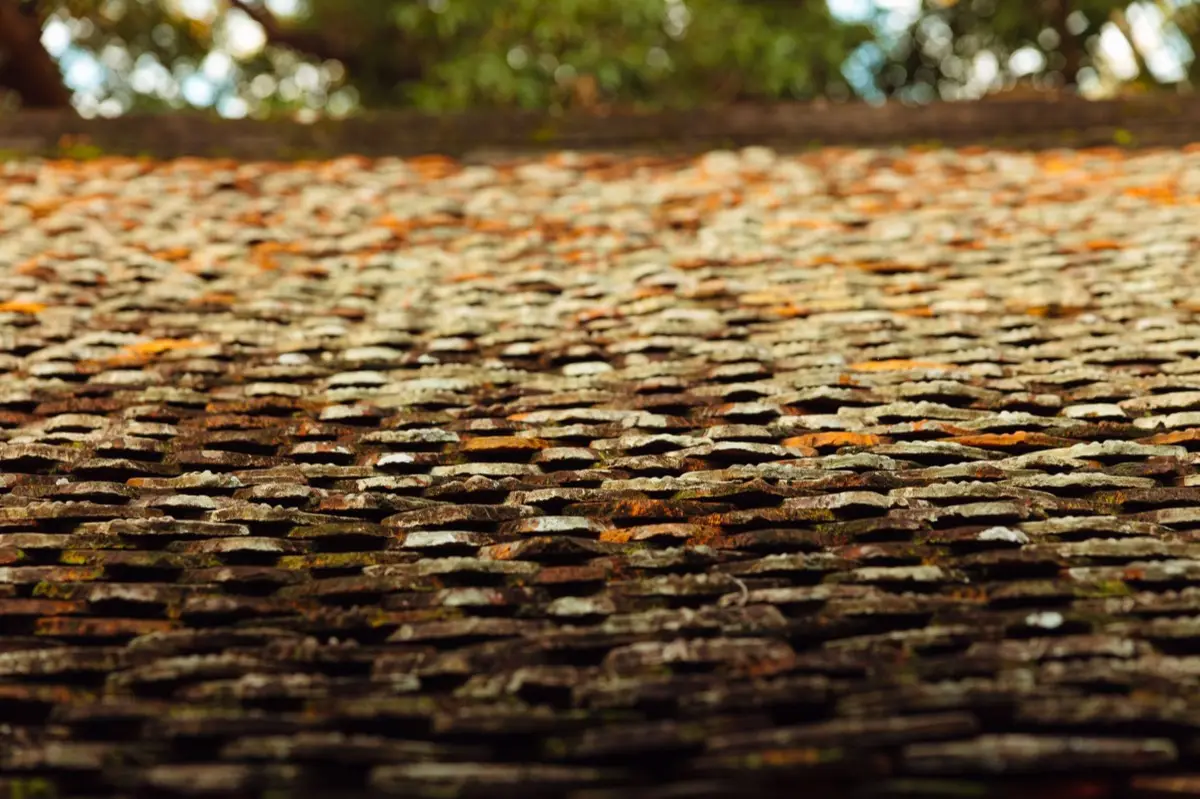
Rated life and actual life are different numbers, and ventilation explains most of the gap. A 30-year architectural shingle over a stagnant attic in a hot climate can be finished at 18. The same shingle over balanced intake and exhaust can beat its rating.
The rating on the wrapper is a laboratory number. Your roof did not grow up in a laboratory.
Expected service life by material
| Material | Commonly rated | What we actually see |
|---|---|---|
| Three-tab asphalt | 20–25 yrs | Often 15–20 |
| Architectural asphalt | 25–30 yrs | Often 20–28 |
| Impact-resistant Class 4 asphalt | 30 yrs | Similar, better hail survival |
| Exposed-fastener metal | 25–40 yrs | Fastener-limited, not panel-limited |
| Standing seam metal | 40–70 yrs | Flashing details fail first |
| Concrete or clay tile | 50+ yrs | Tile outlives its underlayment by decades |
| Wood shake | 25–40 yrs | Highly maintenance-dependent |
| Single-ply membrane, low slope | 20–30 yrs | Seam- and detail-limited |
| Sprayed foam with coating | Indefinite with recoats | Coating clock, not foam clock |
Two rows in that table deserve emphasis because they cause the most expensive surprises.
Tile. The tile lasts fifty years and the underlayment beneath it does not. A tile roof frequently needs a lift-and-relay long before a single tile has failed, which is a large bill that almost nobody has budgeted for. If you own a tile roof, the age of the underlayment is the number that matters.
Foam and coated low-slope. Ultraviolet exposure destroys the coating, not the foam. Recoat on schedule and the assembly effectively continues. Defer the recoat and the whole thing goes.
What actually decides where you land
Ventilation, first and by a distance. Intake at the soffit, exhaust at the ridge, roughly balanced. A shingle in a 150-degree attic loses the volatiles that keep asphalt flexible, and then it curls. If your soffit vents are packed with blown insulation, your roof is aging from the inside. That is what roof ventilation work is for and it is the single highest-return item on any roof.
Fastening. Nails placed above the nail line, or overdriven through the mat, produce a roof that blows off in a wind event a correct roof shrugs at. You cannot see this from the ground once the roof is on.
Orientation. South and west slopes cook. It is normal for one slope to be visibly older than another on the same house, and it is why roofs rarely fail all at once.
Trees. Shade slows ultraviolet damage and encourages moisture, moss and debris in valleys. Net effect is usually negative, mostly because of what collects rather than what grows.
Climate. Freeze-thaw cycling, hail frequency, coastal salt and relentless ultraviolet each subtract differently. A roof in a mild marine climate and a roof in a high-desert summer are not the same product after fifteen years.
The signs, in the order they appear
Roofs give a long warning. Learn to read the sequence.
Granules in the gutters and at downspout outlets. Normal in small amounts after a new install. A steady accumulation on a mature roof means the mat is losing its shield.
Curling and cupping at the tab edges. The asphalt has stiffened. This is the classic mid-to-late signal.
Bald patches where the black mat shows through. Past this point, repairs get difficult because there is nothing sound to fasten into.
Exposed nail heads and tented shingles. Fasteners walking out from thermal cycling.
Sagging along a ridge or between rafters. Structural. Stop reading and call somebody.
A stain on a ceiling. Late, and by then water has been in the decking for a while.
Moss and dark streaking. Streaking is algae and it is mostly cosmetic. Thick moss holds moisture against the mat and lifts tabs, and it is worth removing gently, without a pressure washer, which strips granules faster than the weather does.
Extending a roof honestly
Some roofs can be stretched and it is a smart move when the failures are localized. Replace failed pipe boots, rebuild the one bad valley, correct the ventilation, keep the gutters clear, and get a written roof inspection every year with photographs so you are tracking a trend rather than reacting to a stain.
That approach genuinely buys years on a roof in its late teens with sound decking. It does not work on a roof with widespread granule loss, because at that stage you are fastening repairs into material that will not hold, and each patch is money spent on a surface that is leaving.
The one hard rule: if the decking is soft underfoot anywhere, the timeline is no longer yours. Soft sheathing means water has been sitting in it, and that spreads quietly under intact-looking shingles.
The New Mexico rules that change the arithmetic
Whether replacing early is cheaper depends partly on what your insurer and your state will and will not allow.
New Mexico gives you no cancellation right tied to an insurer denying your claim. The roofing content that says otherwise is Texas or Colorado copy with the state name changed. Your real protection is narrower and comes from the door-to-door sales law: three business days from signing, and only where the seller came to you rather than the other way round.
What New Mexico allows on your deductible
If a carrier is paying for part of the roof, the deductible is the number that decides whether going early is cheaper at all.
No New Mexico statute forbids a contractor from absorbing or rebating your deductible, whatever a competitor's website tells you. The rule that genuinely constrains a roofer here is different and stricter than most states: a contractor may not adjust your claim, or even advertise to adjust it, and holding a public adjuster license is expressly no defense.
When replacing early is the cheaper decision
If the age already puts you at the short end of the service-life table above, and you are also facing a repair bill of any size, spend the money once and get a roof replacement. A repair can only ever buy you the years the rest of the covering still has in it. Spending a full setup to add two more years to a roof with two years left is the arithmetic that wrecks a roofing budget.
The reverse is also true and we say it more often. A roof with a decade left and one failed detail needs the detail fixed, not replaced, and anyone quoting a full re-roof off a single ceiling stain has not been in your attic.
Bottom line
Expect architectural asphalt to give you 20 to 28 real years, longer with correct ventilation and shorter without it. Watch granules, curling and exposed mat in that order. Get an annual written inspection past year ten. Fix ventilation before you spend money on anything else, because it is the cheapest year you will ever add to a roof.
Santa Fe Roof Pros does written roof inspections with photographs, asphalt shingle roof repair, and full roof replacement across Santa Fe and northern New Mexico. Call (855) 554-5093 for a real remaining-life estimate, including the answer that you have years left.
Ready for a free quote in Santa Fe?
Santa Fe Roof Pros — free estimate, clear scope, no pressure. Use the form on this page or jump to the homepage quote.
Related services in Santa Fe
Santa Fe Roof Pros money pages — go straight to the service you need.
- Roof Replacement →
New Mexico quietly removed the cheap option. Section R908.3 of the state residential code requires the old covering to come off when two or more roofs are already stacked on the deck, and again wherever pumice or other granular fill is present anywhere in the assembly.
- Roof Inspections →
An inspection here is a drainage audit. Counting shingles is pointless on a roof with none, so the visit goes to the three things that decide whether a Santa Fe roof survives: where the water goes, how fast it gets there, and what the parapet is doing about it.
- Asphalt Shingle Roofs →
Start with the rule that settles the argument. Section R905.2.2 allows asphalt shingles only on slopes of 2:12 or steeper, and from 2:12 up to 4:12 it requires double underlayment.
- Roof Leak Repair →
That stain on your ceiling is rarely sitting under the actual hole. On a parapet roof water enters at the wall, travels sideways inside the parapet core, and surfaces wherever the plaster gives up first, which can easily be two rooms away from the actual defect.
- Storm Damage Restoration →
Santa Fe averages about thirteen and a half inches of precipitation in a normal year, and NOAA puts more than half of New Mexico's annual total inside the July-through-September monsoon. The roof's entire water budget arrives in a handful of twenty-minute cells.
Frequently asked questions
How long does an asphalt shingle roof last?
Three-tab shingles are commonly rated 20 to 25 years and architectural shingles 25 to 30. Real-world service life usually lands below the rating, because the rating assumes correct ventilation, correct fastening and a moderate climate. A well-ventilated architectural roof in a mild climate can beat its rating. A poorly ventilated one in relentless heat can lose a third of it.
What shortens a roof's life the most?
Attic ventilation, by a wide margin. A shingle cooks from underneath in a stagnant attic and the asphalt loses volatiles faster, which is what makes tabs curl and granules release. Second is fastening errors, usually nails driven high above the nail line or overdriven through the mat. Both are installation decisions, which is why two identical roofs on the same street can age a decade apart.
Does a dark roof wear out faster?
A dark surface runs hotter, and heat is what ages asphalt, so directionally yes. In practice the effect is smaller than ventilation and it is smaller than orientation. The south and west slopes on any house wear visibly faster than the north slope regardless of color, which is why a roof rarely fails evenly and why partial-slope replacement is a real conversation.
Can I get another five years out of my roof?
Sometimes, and it is a legitimate strategy. If the failures are localized and the decking is sound, targeted repairs plus fixing the ventilation can genuinely buy years. What does not work is patching a roof that has widespread granule loss and exposed mat, because at that stage every repair is being fastened into material that no longer holds a nail well.
Should I replace a roof before selling the house?
It depends on how it inspects. A roof with clear remaining life and a written inspection report is a fine thing to hand a buyer. A roof at the end of its life will come up in inspection and be negotiated at a number you do not control, usually higher than what you would have paid to do it yourself. In between, get the inspection in writing and let it decide.
How often should a roof be inspected?
Once a year past the ten-year mark, and after any significant wind or hail event regardless of age. The point of an annual look is that a failing pipe boot or a lifted flashing costs very little to fix and a great deal to ignore, because water in the decking is what converts a repair into a replacement.
Local context
How this applies in Santa Fe, NM
Every article here is written from roofing work done in Santa Fe and northern New Mexico, so the numbers reflect local labour, permit and material costs rather than a national average. Your own job can land either side of them depending on access, the condition of what is already there, and the materials you pick — canale pans lapped six inches inside the parapet, continuous parapet coping wrapped down both faces, sprayed polyurethane foam with a silicone topcoat.
The way to turn any of this into a real answer is to have someone look at your actual situation. The free estimate is free, itemized and written down, with no deposit and no obligation. Call (855) 554-5093 or start on the Santa Fe Roof Pros homepage.
Areas Santa Fe Roof Pros covers
Santa Fe first, then the surrounding communities of northern New Mexico. Each has its own page with local detail rather than a copy of this one:
- Eldorado at Santa Fe, NM — Santa Fe County, population 6,005
- La Cienega, NM — Santa Fe County, population 3,885
- Agua Fria, NM — Santa Fe County, population 2,913
- Pojoaque, NM — Santa Fe County, population 2,071
- Nambé, NM — Santa Fe County, population 1,907
- Tano Road, NM — Santa Fe County, population 1,573
Or jump to the full list of Santa Fe services.
More from the Santa Fe Roof Pros blog
- Does Insurance Cover Roof Replacement in Santa Fe, NM?
Insurance pays for sudden storm damage, not for a worn-out roof. Here's how adjusters actually decide, and what ACV settlement means for Santa Fe, NM homeowners.
- Will Home Insurance Cover a Roof Leak in Santa Fe, NM?
The leak is not what gets decided. The cause is.
- What Is a Soffit? The Board Under Your Santa Fe, NM Eaves
Soffit is the underside of the overhang, fascia is the board on its edge. Why vented soffit is the intake half of a Santa Fe, NM attic, and how both boards fail.
The Santa Fe Roof Pros Team
roofing specialists serving Santa Fe, NM
Written by the Santa Fe Roof Pros team — insured roofing pros serving Santa Fe, NM and the surrounding area.